Decades of remodels on one slab
South Natomas was built largely in the 1970s and 80s, a couple of decades ahead of North Natomas. Its community plan dates from 1988, and the office parks along I-5 grew up alongside the neighborhoods. Homes here are a mix of single-family houses and townhouses on concrete slabs, and the oldest are now up to about fifty years old.
That age is the main thing to know about tile here. A house from the late 1970s has probably been through at least one kitchen and one bathroom update already. When we pull up a floor in 95833, we are often looking at someone else's renovation from the 1990s or 2000s, sitting on top of whatever the house started with.
Layers we often find
- Ceramic tile laid over an earlier sheet vinyl or vinyl tile floor, sometimes with a thin underlayment between them.
- Tile over tile, where a past installer set a new floor straight onto the old one to save a demolition day.
- Showers with tile on the walls but no real waterproofing behind it, or a fiberglass or cultured-marble surround that replaced an original tiled one.
- Floors that sit noticeably higher at doorways than they were designed to, because of the layers stacked up.
Demolition is the first inspection
On a newer house, removal is mostly labor. Here it is also how we learn what the house has been through, so we take the first layer up in one area, look at what is underneath, and then plan the rest of the tear-out.
Old resilient flooring and dark adhesive
Sheet vinyl, vinyl tile and some black adhesives from earlier decades can contain asbestos, and houses of this age were built while those products were still in common use. If we lift tile and find an older resilient floor or dark mastic underneath, we stop and recommend testing before it is disturbed further. Testing is done by an accredited lab, and if the material does contain asbestos, removing it is a job for a licensed abatement contractor. It adds a step to the schedule. It is still the right order of work.
Getting back to clean concrete
When the old layers are gone, the slab underneath is often patchy: old adhesive, thinset ridges and fill from past jobs. We grind it back so the new thinset bonds to concrete. Tile set over an old adhesive film may hold at first and then start to sound hollow a few years later. Cracks that earlier installers simply tiled over get treated as our tile removal and floor prep page describes, and the slab is flattened if you are moving to a larger tile, as on this large-format marble-look kitchen floor.
Heights at the doorways
Removing two layers and putting back one tends to lower the finished floor. That is often a relief at sliding doors and where the tile meets carpet, but it can leave a gap under existing baseboards and door casings. We measure this before demolition so you know whether trim will need attention. Sliding door tracks are the usual pinch point in the other direction, where a floor that ends up higher can stop the door from clearing.
Showers that have been patched before
An older shower that has been regrouted and recaulked several times is telling you something about what is behind it. When we take one apart, we expect some water damage at the bottom of the walls and plan the job with that in mind. Soft framing gets repaired before anything goes back. The rebuild then follows the waterproofing and flood-test process on our bathroom and shower tile page.
The shower valve in a house this age may be original or close to it. If it needs replacing, that is a job for your plumber, and the time to do it is while the wall is open, after demolition and before the backer board goes up. We tell you which day the wall will be open and leave the valve area alone until the plumber has finished.
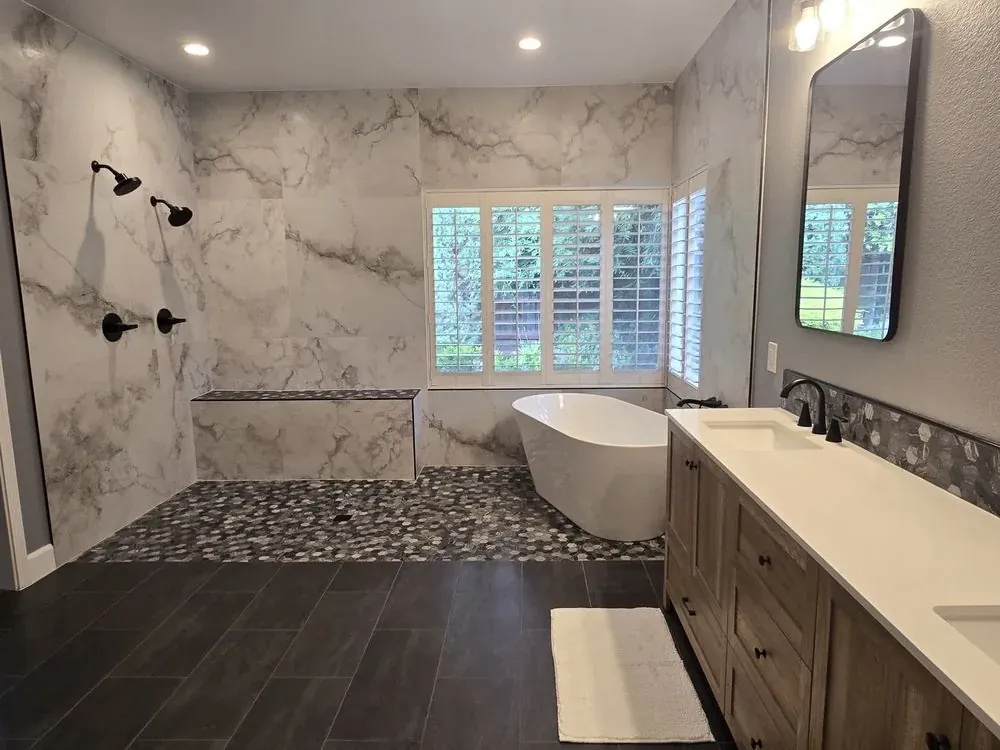
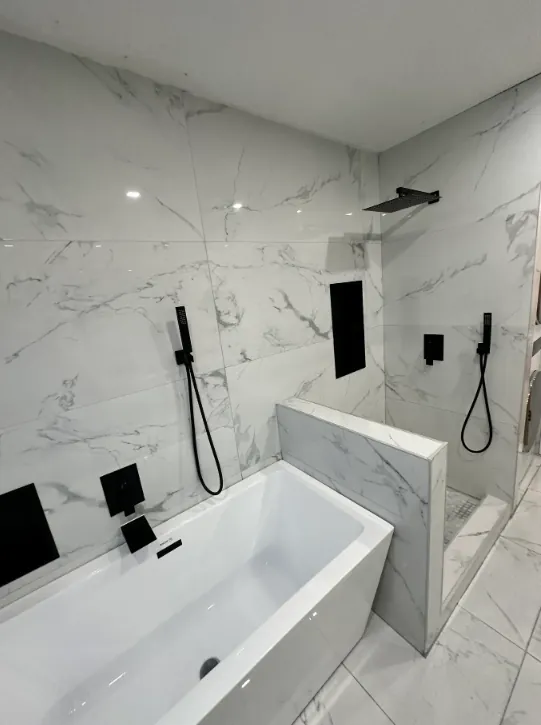
Two South Natomas bathrooms on this site show where these rebuilds can go: a marble-look walk-in shower beside a tub and a hexagon mosaic wet area with a freestanding tub.
Townhouses, shared walls and offices along I-5
Townhouses and small complexes are part of the South Natomas mix, and they change the logistics more than the tile.
- HOA rules in townhouse complexes can cover shared walls, work hours and where a dumpster may go. Check yours before we schedule.
- Parking is often limited. We bring what we need for the day and set up the saw where dust stays out of shared spaces.
- Grinding a slab is loud and carries through a shared wall. We tell you which days it will happen so you can let the neighbors know.
- In a unit with a neighbor below, ask the HOA about sound rules for hard flooring before you choose tile. Some associations require an acoustic underlayment under tile on upper floors.
- Older homes often have one full bathroom. If that is the one we are rebuilding, we go through the days it will be out of use before we start.
We also do commercial tile installation, which here tends to mean small offices, restrooms and break rooms in the buildings along I-5. Those jobs are often scheduled around business hours.
On the residential side, the common requests are full tear-outs of kitchen, entry and hall floors, shower rebuilds, tub-to-shower conversions where the room allows, and backsplashes behind counters that have already been replaced once. All of that falls under residential tile installation, and our shop on Del Paso Road is about 3 miles away.