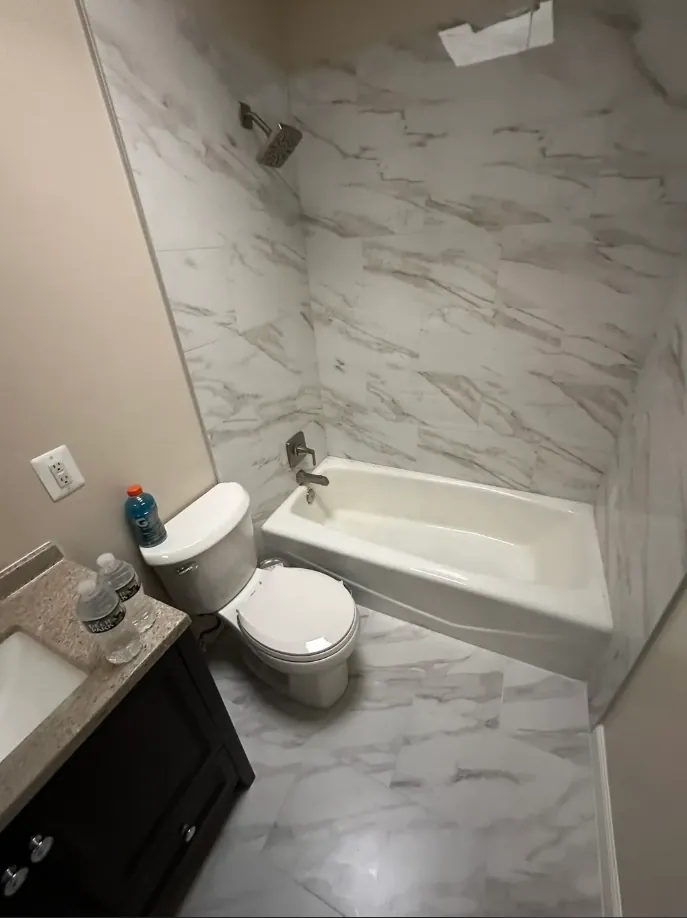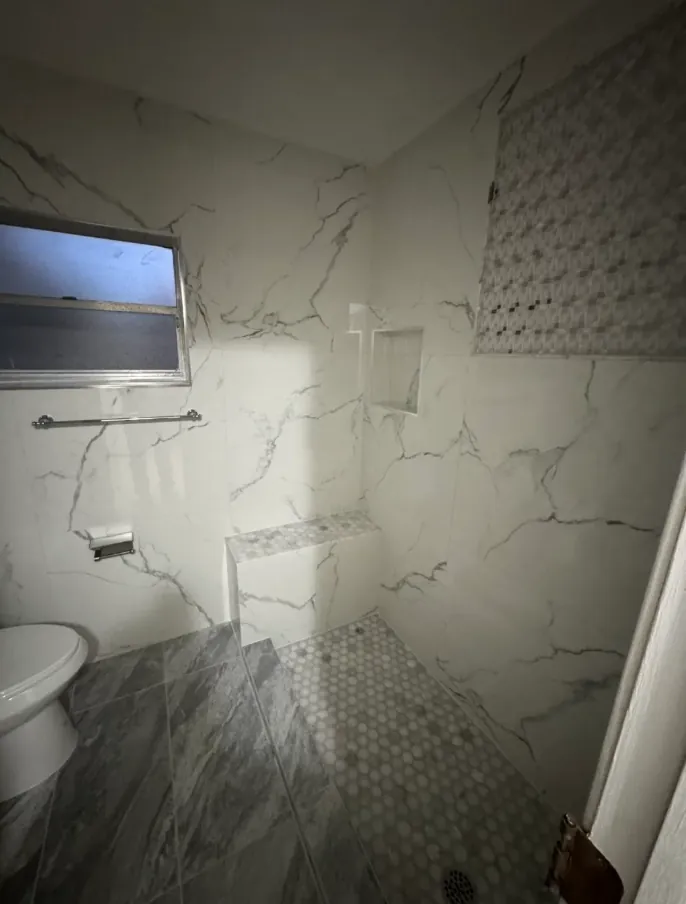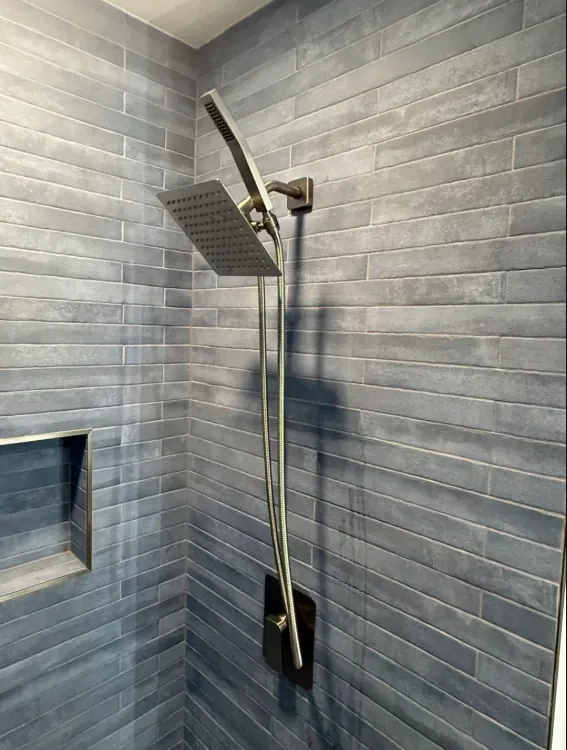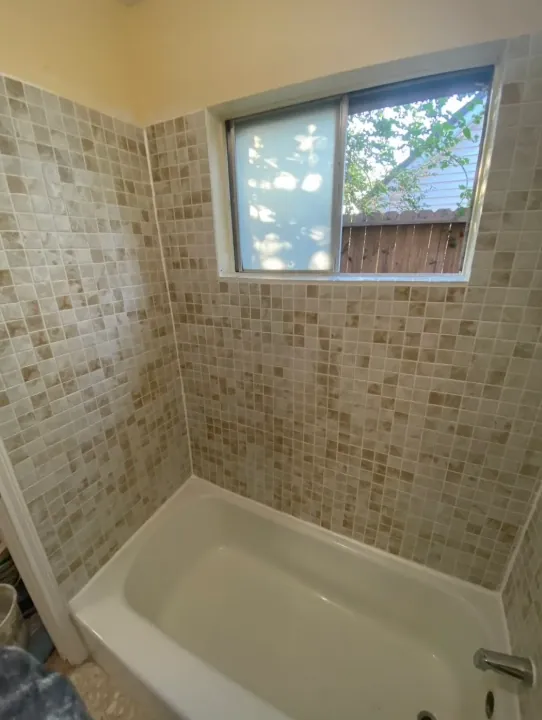
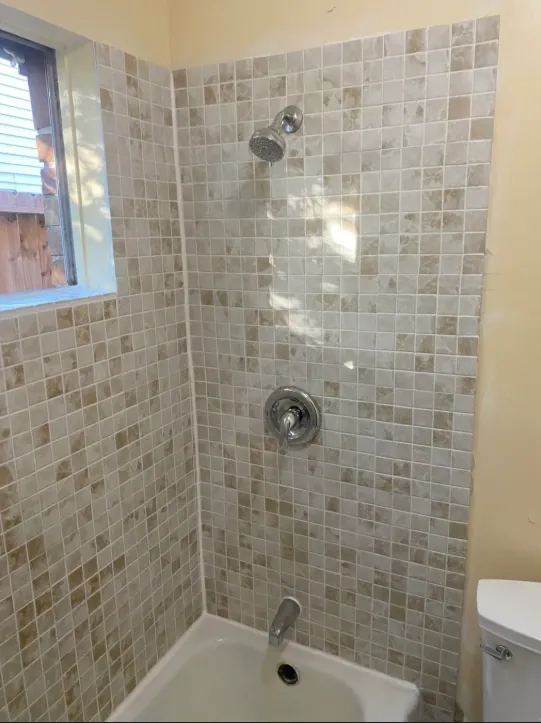
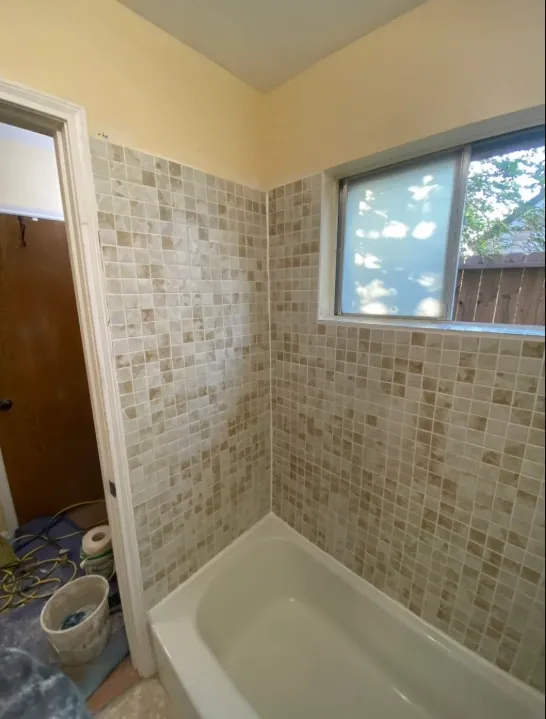
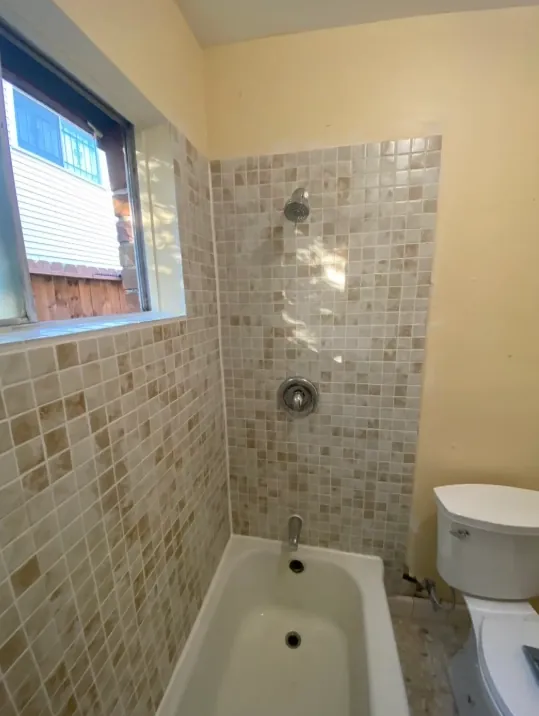
The photos go around this tub alcove from the window to the doorway, and the notes below follow them in the same order. Every wall is the same small square mosaic in mixed cream, tan and light beige, set on a straight grid. There is no larger field tile and no accent band.
Photo by photo
- The back wall and its window. The mosaic runs up from the tub ledge and turns into the opening on both sides and across the sill. Small squares make that turn easily: a window return takes a row of full or near-full pieces, where a large tile would need long, thin cuts. The sill tile can also be given a slight pitch toward the tub without rocking.
- The end wall. The shower head and valve sit on one vertical line inside the mosaic field, and the tile stops in a straight vertical edge where the painted wall begins. The shower head, valve trim and tub spout are chrome.
- The alcove from the doorway. From here the top edge of the tile shows as a level line a short way below the ceiling, the same height on all three walls.
- Two walls with the toilet beside the tub. The wall tile comes down onto the tub ledge in a straight bottom line, and the joints run unbroken through the inside corner.
One of the photos was taken with the job still open, with a bucket, cords and tools sitting outside the bathroom door.
Sheets and grout
Mosaic comes mounted on sheets. If the gap between two sheets is even slightly wider than the gap between squares on the sheet, a faint grid of lines shows across the whole wall. On these walls the joints run straight from the tub to the top edge with no sheet lines showing.
The grout is a pale tone that nearly matches the cream squares, so the wall does not break up into a visible grid and the tan pieces supply the pattern. A surround like this has a lot of grout. Cement grout in a shower should be sealed and kept up; urethane or epoxy grout costs more at the start but resists staining and needs no sealing.
In this Rio Linda bathroom the window was the detail to plan first. Its returns and sill set where the rows start on the back wall, and the rest of the alcove follows from there.